














Services / Professional Training
Professional Training & Consultation
The Redpath Centre, alongside many in Canada’s autism community, has identified a critical shortage of clinicians trained to diagnose and support autistic teenagers and adults in Ontario. This gap creates significant barriers to accessing timely, local services rooted in a contemporary understanding of autism and clinical best practices. While post-secondary clinical programs may touch on autism, the curriculum is often brief and primarily child focused.
The Redpath Centre has taken a provincial leadership role by creating opportunities for professional knowledge exchange, education, and clinical training in neurodevelopmental conditions across the lifespan. We currently offer the following learning and consultation opportunities:
Supporting Autistic Adults: A Three-Part Video Series for Psychologists
Most psychologists supporting adults have not received formal training in autism, even as a growing number of diagnosed and undiagnosed adults seek help for medical, social, and mental health needs. As these individuals increasingly enter adult services, it is vital that clinicians are equipped to recognize and support them. Led by Drs. Vicki Nolan and Casey Fulford, this series draws on clinical literature and extensive practice experience to explore the presentation of autism in adulthood.
Part 1: An Overview of Autism in Adulthood (3 Hours)
Provides a comprehensive look at diagnostic criteria and psychosocial functioning.
- Key Objectives: Apply DSM-5-TR criteria to adults; understand complex behavioral presentations and strengths; explore intersectionality (gender, aging, sexual diversity); and implement neurodiversity-affirming practices.
Part 2: Adult Autism Assessment (3 Hours)
Focuses on diagnostic protocols using clinical interviews and standardized measures.
- Key Objectives: Adapt diagnostic criteria for adult presentations; master assessment components and measures; navigate differential and co-occurring diagnoses; and formulate post-diagnostic recommendations.
Part 3: Interventions and Supports for Autistic Adults (3 Hours)
Explores the service landscape and the necessity of interdisciplinary collaboration.
- Key Objectives: Understand interdisciplinary support models; adapt psychotherapy modalities for autistic clients; and recognize the systemic marginalization autistic adults face when seeking care.
Clinical Consultation and Supervision for Registered Clinicians in Psychology, Social Work, Psychotherapy, and Speech-Language Pathology
We provide clinical consultation and supervision for Ontario professionals working with individuals diagnosed with—or suspected of having—autism, ADHD, and other neurodevelopmental conditions. Sessions are available virtually or at our Toronto office, ranging from single-issue consultations to ongoing supervision.
Available Consultants:
- Psychology: Drs. Vicki Nolan and Casey Fulford provide support regarding diagnostic protocols, differential diagnosis, measure interpretation, and intervention planning.
- Social Work: Dr. Kevin Stoddart and Tina Gandhi offer expertise in interventions for youth and adults, family support, and complex service navigation.
- Psychotherapy: Kim Cross and Erin Mlotek specialize in mental health interventions for neurodiverse individuals, family support, and navigation.
- Speech-Language Pathology: Leora Palace provides expertise on the SLP’s role in assessment and intervention across the lifespan.
Recent Publications in Professional Education
Social Work Practice in Autism and Intellectual and Developmental Disabilities (2025). Edited by Kevin P. Stoddart and Ann Fudge Schormans. Wilfrid Laurier University Press
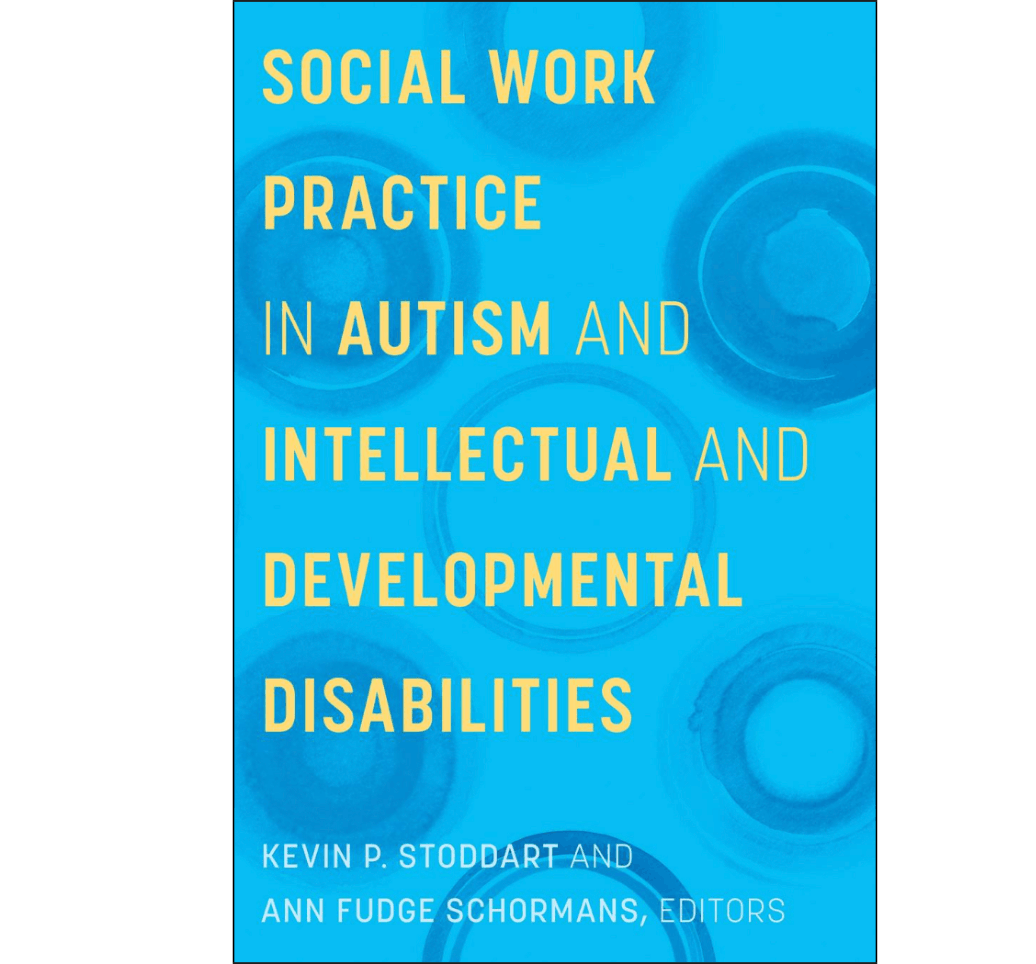
In Canada, social work—both the profession and the academic discipline—has given inadequate attention to individuals living with autism and intellectual and developmental disabilities. This is true regardless of whether the social work role is in a clinical capacity, community-based programs, academic research and educational endeavours, or an advocacy role or supporting self-advocacy for basic needs and rights to services and supports.
Many people with autism and intellectual and developmental disabilities, and their supporters, value community involvement and integration, quality of life, and access to a wide range of services, so it is likely that social workers will encounter these clients in their careers. Consequently, the onus is on the social work profession to attend more fully and carefully to preparing students, practitioners, and researchers.
This peer-reviewed volume provides a range of perspectives, practices, and ideas relative to social work’s engagements with individuals living with autism, intellectual disabilities, and developmental disabilities. Contributors include social work practitioners, academic and community-based researchers, educators, activists, and self-advocates. Reflecting different ways of theorizing, speaking about, and working with people with autism, intellectual disabilities and developmental disabilities, it explores both tensions and possibilities for social work practice, research, education, advocacy, and policy development that better meet their needs and desires for their lives.